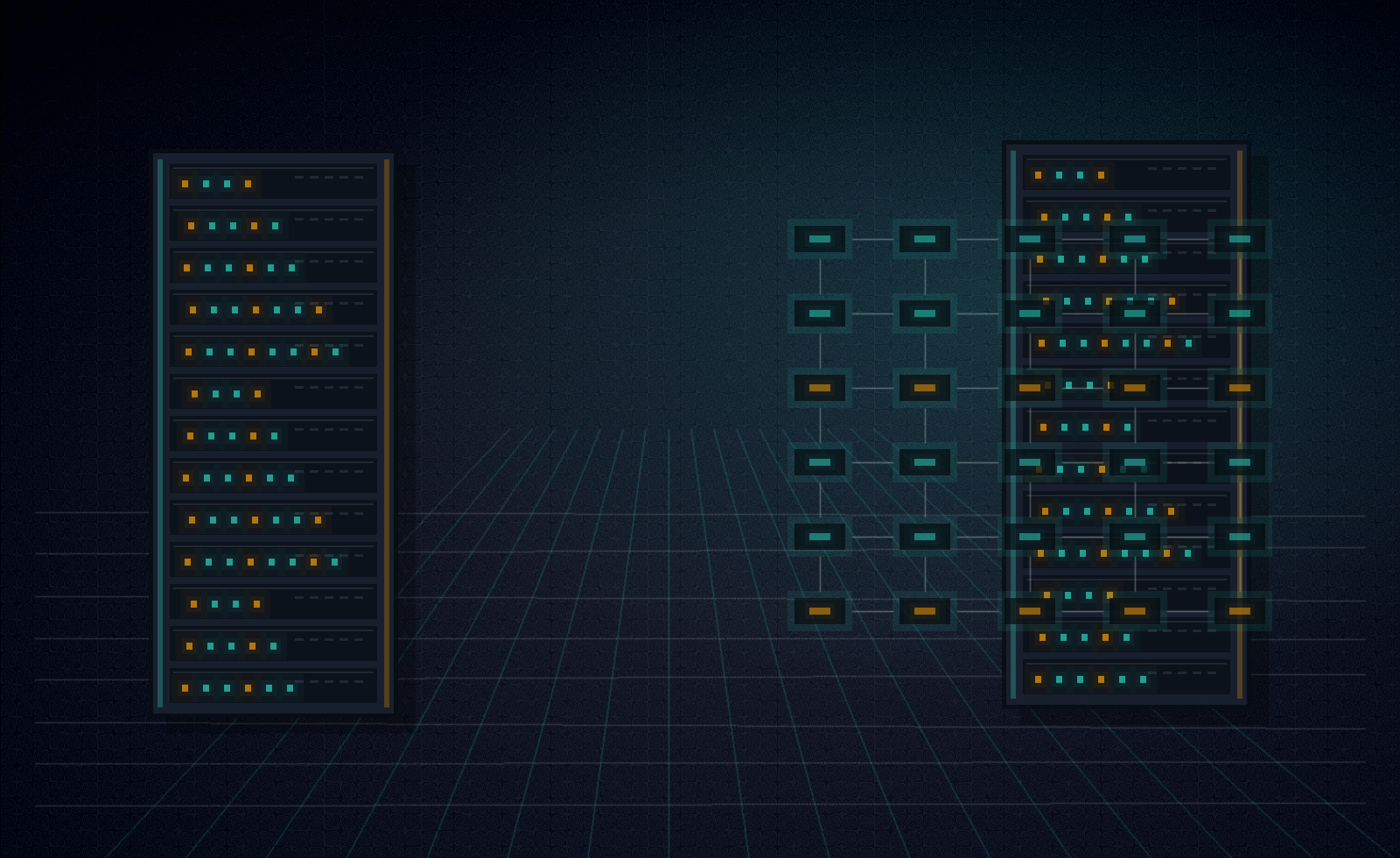
Resource model
VPS uses virtualization and assigned parameters, but host CPU power is shared between many machines. For many websites and apps this is enough because load appears in bursts.
VDS gives you dedicated vCPU and RAM capacity, so performance is more predictable under long-running load.
Cost and flexibility
VPS is usually cheaper and more flexible at the start. It lets you launch quickly, test the application and scale the plan later.
VDS costs more, but you pay for predictability and lower risk that other workloads influence your service.
Typical scenarios
Choose VPS for web apps, company panels, test environments and self-managed WordPress. VDS fits databases, queues, background processes and stores with steady traffic.
The more critical the workload, the more you should invest in monitoring, backup procedures and clear operational ownership.
How to decide
If you do not know the load profile, start with a VPS and observe CPU, RAM, I/O and response times.
When you see constant CPU load, slow database queries or a growing job queue despite optimization, compare migration cost with VDS cost.
FAQ
Frequently asked questions
Is VDS always faster than VPS?
Not always in short tests, but it is more predictable under steady load because it uses dedicated CPU and RAM capacity.
Can I migrate from VPS to VDS?
Yes. Migration usually includes data transfer, system configuration, application tests and traffic cutover.
Does VDS replace high availability?
No. VDS improves resource predictability, but HA requires separate architecture, replication and failover procedures.